Laboratory Incubators
Available on GeM Portal: Laboratory Incubators (Q3)
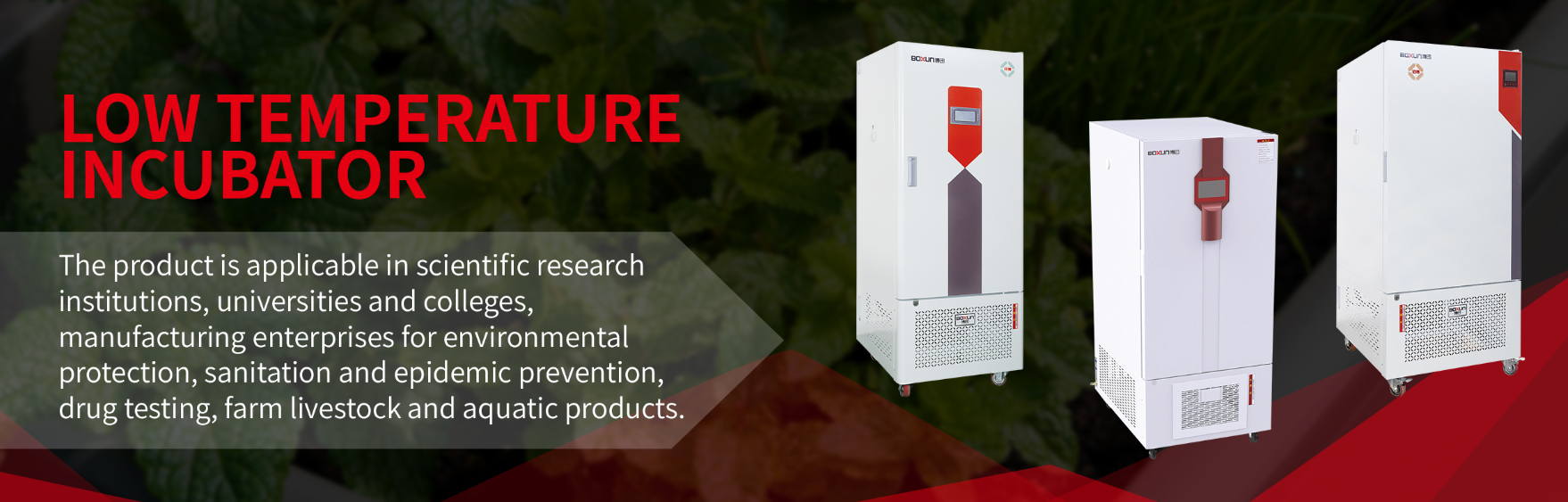
A laboratory incubator is an insulated chamber that maintains a defined environment so microorganisms, cells and test samples can be grown or held under stable, repeatable conditions. Standard bacteriological laboratory incubators operate from roughly 5 °C above ambient up to about 60–70 °C, making them suitable for bacterial culture and general microbiology.
Veltrix Scientific Systems supplies Laboratory Incubator on GeM Portal for microbiology, BOD testing and cell culture, with complete support for institutional and GeM‑aligned procurement.
Core laboratory applications
| Applications | Description |
|---|---|
| Bacteriology and mycology | incubating culture plates and broths at 30–37 °C for microbial growth. |
| Clinical microbiology and pathology | incubation of diagnostic media and samples in hospital and medical college laboratories. |
| BOD and environmental testing | Biochemical Oxygen Demand tests and related studies at controlled low temperatures in BOD incubators. |
| Stability, shelf‑life and QA studies | holding samples at specific temperatures to assess product behaviour in pharma and food industries. |
| Cell and tissue culture | mammalian cell growth in CO₂ incubators with controlled CO₂ concentration and temperature. |
Product / Category Coverage
Veltrix Scientific Systems operates as a multi‑brand distributor and systems provider within the Laboratory Incubators (Q3) category on GeM and similar institutional frameworks.
1. Bacteriological laboratory incubators
Typical characteristics:
Bacteriological incubators are heated incubators for general microbiology work around 37 °C and other growth temperatures.
- Temperature range about 5 °C above ambient to 60–70 °C.
- Double‑walled construction, with SS 304 inner chamber and powder‑coated MS outer body.
- Glass wool or PUF insulation between walls to minimise heat loss and improve stability.
- Microprocessor PID or thermostat‑based controllers with LED or LCD displays.
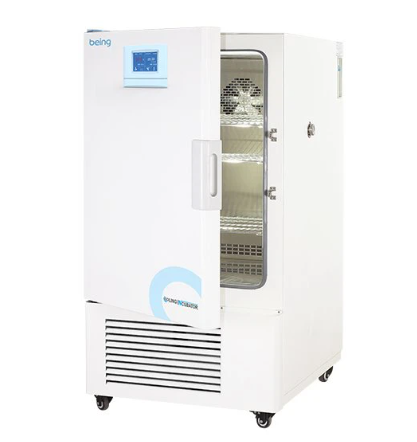
Bacteriological incubators available Models
- RLESCIENTIFIC / Reliable type LED Display Bacteriological Incubator – offered under Laboratory Incubators on GeM, with stainless steel inner chamber, LED display, PID control and >400 L capacities referenced in related GeM listings.
- Bacteriological Incubator – SS 304 inner chamber, 350×350×350 mm – a typical 35 L bench model with temperature range ambient +5 to 60 °C and ±0.5 °C accuracy, double‑walled with glass wool insulation.
- Laboratory bacteriological incubators 35–1000 L – manufacturers like Bio Technics India supply a full size range (35 to 1000 L) with SS 304 inner, MS powder‑coated exterior, glass wool insulation and accuracy ±2 °C (with optional ±0.5 °C controller).
Need Quotation for Laboratory Incubators? Call/WhatsApp @ +91 7678385602
2. BOD (Biochemical Oxygen Demand) incubators
Typical characteristics:
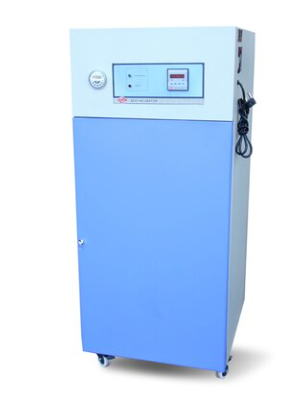
BOD incubators add refrigeration to maintain lower temperatures required for BOD and related environmental tests.
- Temperature range typically 5–60 °C with fine control at 20 °C.
- SS inner chamber with removable trays; refrigerated system built into the cabinet.
- Digital microprocessor control and alarms for deviation.
GeM carries BOD incubators from trusted brands under Laboratory Incubators, with details like “LED Display BOD Incubator” and “LCD Display BOD Incubator”.
3. CO₂ incubators
Typical characteristics:
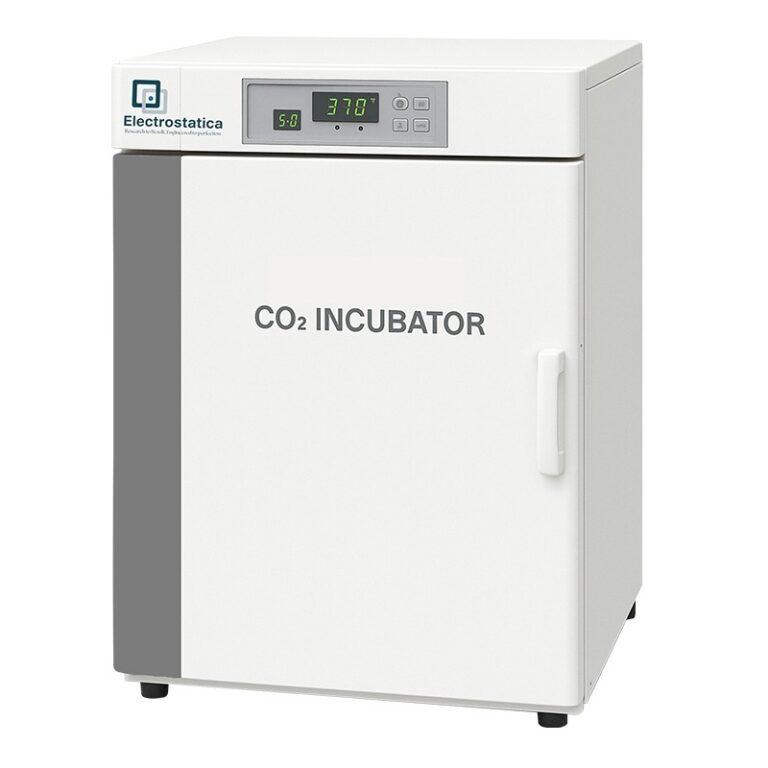
CO₂ incubators are specialised laboratory incubators for mammalian cell and tissue culture.
Typical features:
- Chamber volumes usually 80–250 L.
- Temperature range 5 °C above ambient to around 50–60 °C.
- CO₂ range typically up to 20% with sensors and closed‑loop control.
- Stainless steel chambers with rounded corners for cleanability.
Indicative Model Comparison
| Parameter | Bench Bacteriological Incubator (35 L) | Large Bacteriological Incubator (≈300–400 L) | BOD Incubator (MK / MAC type) | CO₂ Incubator (iLabot type) |
|---|---|---|---|---|
| Type | Bacteriological incubator | Bacteriological incubator | BOD incubator | CO₂ laboratory incubator |
| Capacity (approx.) | 35 L, 350×350×350 mm inner | 300–400+ L (multi‑shelf) | 90–330 L (common sizes) | 80–250 L |
| Temp. range | Ambient +5 to 60 °C | Ambient +5 to 60–70 °C | 5 to 60 °C | 5 °C above ambient to 50 °C |
| Inner chamber | SS 304 | SS 304 | SS 316 / SS 304 | Stainless steel |
| Controller | Thermostat / PID digital | PID digital with LED display | Microprocessor PID, digital display | Microprocessor, CO₂ control |
| Typical use | Teaching and small labs | High‑throughput labs / central microbiology | BOD, stability, environmental tests | Mammalian cell culture |
Why Choose Veltrix Scientific Systems
Veltrix Scientific Systems is trusted, procurement‑focused distributor of major medical & scientific equipments. Key reasons institutions select Veltrix for Laboratory Incubator on GeM Portal or preferred by R&D labs:
- Deep familiarity with GeM laboratory categories – understanding of the Laboratory Incubators Q3 category and related documentation expectations.
- Multi‑brand distributor capability – ability to work with several OEMs (REMI, RLESCIENTIFIC, MAC, and MK Scientific Instruments etc.) and models, allowing technical committees to compare functionally equivalent incubators instead of being tied to a single make.
- Institution‑wide view – experience in specifying incubator families that can be standardised across teaching labs, diagnostic labs and research units.
- Lifecycle‑oriented guidance – attention to serviceability, spare availability, calibration support and long‑term chamber integrity.
Frequently Asked Questions (FAQs)
What is the GeM category for Laboratory Incubators?
GeM lists Laboratory Incubators as a Q3 category with category insights that outline technical expectations and supplier conditions for institutional procurement.
Which types of laboratory incubators are covered for institutional use?
Institutions commonly require bacteriological incubators, BOD incubators for environmental and stability testing, and CO₂ incubators for cell culture work.
What temperature range is typical for a bacteriological laboratory incubator?
Most bacteriological incubators operate from approximately 5 °C above ambient to 60–70 °C with accuracy around ±0.5–2 °C depending on controller type.
How does a BOD incubator differ from a standard bacteriological incubator?
BOD incubators include refrigeration to maintain low temperatures (around 20 °C) required for Biochemical Oxygen Demand and similar tests, while standard bacteriological incubators are heating‑only units.
Which brands of laboratory incubator are commonly visible around the GeM ecosystem?
Examples include REMI, RLESCIENTIFIC / Reliable, MAC, M. K. Scientific Instruments and several Indian manufacturers supplying bacteriological, BOD and other incubators with SS chambers and digital controls. Veltrix is registered distributor of Laboratory Incubator on GeM Portal.
What construction features should technical committees insist on?
Key features include SS 304 or 316 inner chambers, powder‑coated MS exteriors, adequate glass wool or PUF insulation, reliable PID controllers and appropriate ventilation and shelves.
How can Veltrix help when specifying a Laboratory Incubator on GeM Portal?
Veltrix reviews your BoQ, test methods and lab layout, then proposes a short list of compliant incubator models and capacities, mapped to the GeM Laboratory Incubators category. We are the registered distributor of Laboratory Incubator on GeM Portal.
Are forced‑convection incubators better for all applications?
Forced‑convection incubators improve temperature uniformity and recovery after door openings, which benefits sensitive tests, but some applications and budgets may still accept natural‑convection designs.
What documentation do buyers usually ask for during incubator procurement?
Common requirements include CE or equivalent conformity, ISO certifications, detailed technical datasheets, manuals, performance specifications and declarations aligned with tender or GeM terms.
How should institutions plan for calibration and maintenance?
Laboratories should include scheduled verification of temperature accuracy, controller performance and alarm functions, usually supported by OEM‑authorised service or third‑party calibration providers.